BUYER'S GUIDE
Tanzanite care: cleaning, storage and everyday wear
Tanzanite benefits from gentle handling and a considered setting, especially in a ring. First establish the condition and any treatments of your individual stone. For routine care, an appropriate method matters more than intensive cleaning or frequent polishing.
Hardness is different from resistance to impact
GIA gives tanzanite a Mohs hardness of 6–7 and notes its cleavage and vulnerability to hard blows. Hardness concerns resistance to scratching rather than indestructibility. Remove a ring before activities that could bring the stone into contact with a hard surface.
Before setting, tell your jeweller whether you want occasional jewellery or a ring for frequent wear. Discuss protection around the stone, setting suitability and checks of its security. Have a loose stone assessed first; shape and weight alone cannot establish an appropriate jewellery construction.
A gentle routine for cleaning
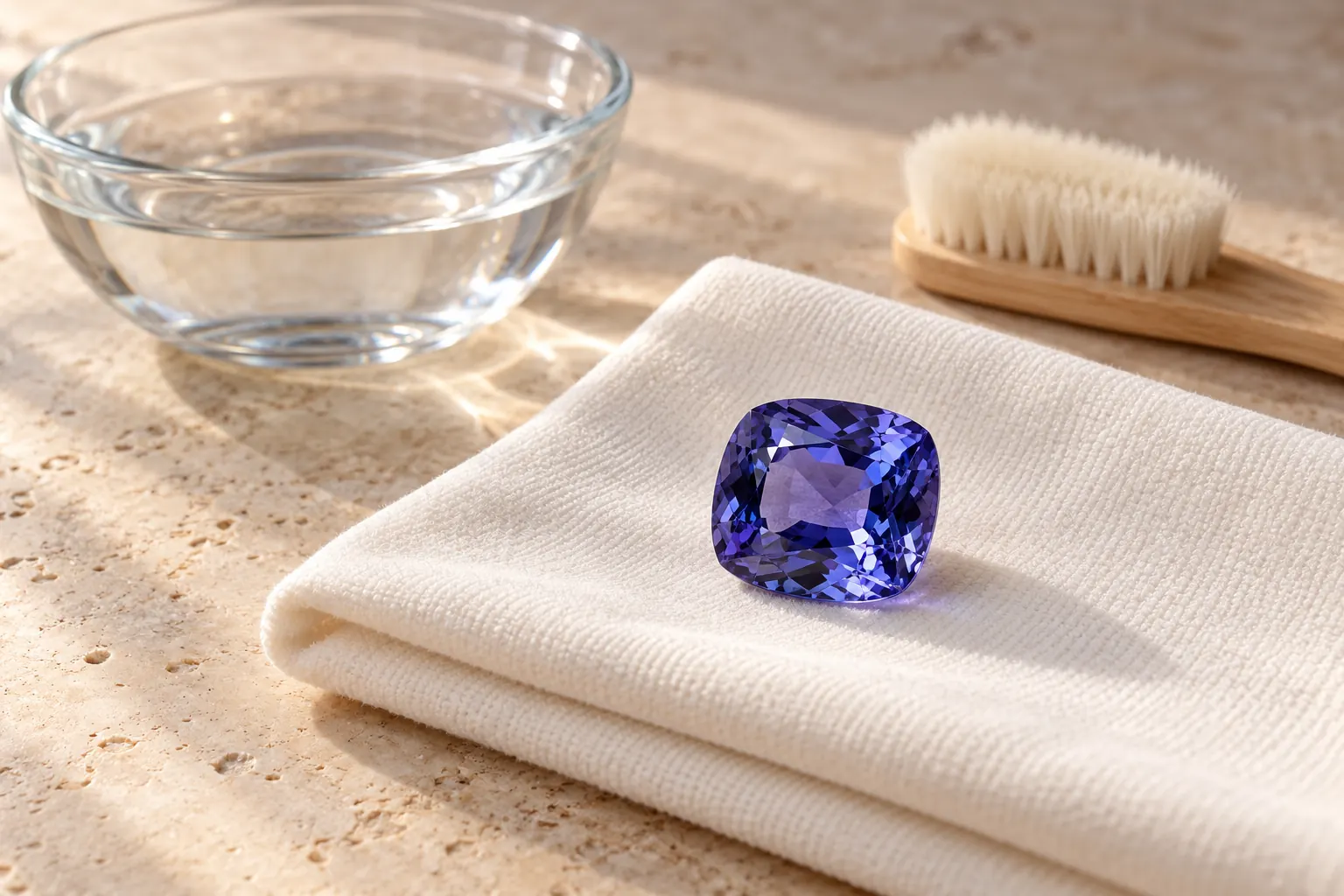
GIA recommends warm soapy water. Prepare a small bowl, a soft cloth and a gentle tool appropriate for the jewellery; work on a stable surface away from an open drain. If the stone is loose in its setting, fractured or of unknown treatment status, consult a professional first.
Remove dirt gently without heavy pressure, then rinse and dry with a soft cloth as advised by your jeweller. For a complete piece, the method must also suit the metal, other stones and construction. A clean surface does not need unnecessary repeated intervention.
Methods and conditions to avoid
GIA advises against ultrasonic and steam cleaners for tanzanite and cautions against very high temperatures and sudden temperature changes. Professional equipment is not automatically appropriate. When leaving jewellery for service, explicitly identify the tanzanite and provide available treatment information.
Storage and checks before wear
Keep the stone or jewellery separately in a soft protective container so it cannot move freely among other pieces. Retain documentation as part of your records. Before wearing, look for changes in the setting, visible damage or an unfamiliar change in appearance. If in doubt, set the item aside for inspection rather than attempting a home repair.
For a new tanzanite, request treatment information and care guidance for the actual piece before ordering. Heat treatment for colour and other interventions are different disclosures. Clear documentation makes later work by your jeweller and appropriate handling easier.
| Situation | Approach |
|---|---|
| Routine dirt | Gentle cleaning with warm soapy water |
| Ultrasonic or steam | Avoid for tanzanite |
| Sport and hard knocks | Remove jewellery before the activity |
| Loose setting or damage | Stop wearing and arrange professional inspection |
Before sending an enquiry
- Do I know its condition and any treatments?
- Is the cleaning method suitable for the whole piece?
- Do I have separate soft storage and a jeweller to consult?
Sources and further reading
This guide helps compare products and order terms. It does not promise future returns or buyback.